
Rain, storms, wind and heat on the Sarasota beaches
What If It Rains on Your Family Photo Session in Florida?
If rain takes your evening, moving it costs you nothing: I move the session to the nearest open morning or evening, and your deposit stays on the booking. I make that call on the day by watching the real sky over the beach, not the rain icon on your phone.
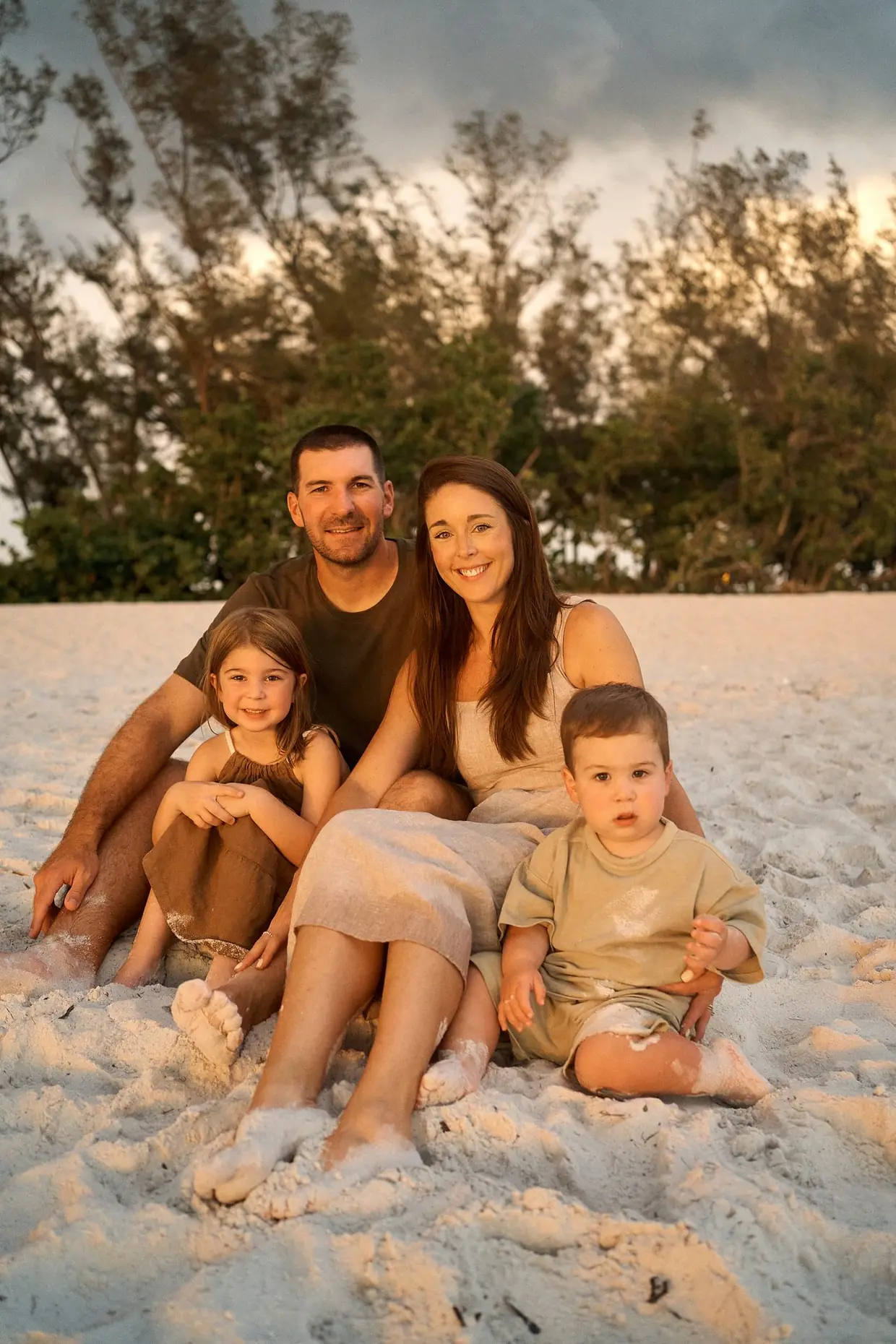
By Yuriy, a family photographer on Siesta Key and the Sarasota beaches year round. Weather figures from the National Weather Service and NOAA, checked September 2026. Photo: Anna Maria Island, under a dark sky.

A weather move costs
Nothing
The deposit stays on your booking; the rest is paid after we actually shoot.
Who decides
I do, on the day
Rain, storms and lightning are my call. Strong wind is yours, after I tell you honestly what it means.
Summer rain, 5 to 8 pm
About 1 in 7
On a typical summer day on Siesta Key, tropical storm days left out. In the early morning, under 1 in 20.
Wettest month
August
Some rain on more than half the days, counted over the whole 24 hours, not your hour.
My rain policy, in five points
Here is the whole of it, the way it works from the moment you book.
01
Who decides
I do. If I decide the weather makes a good session impossible, we move it at no cost to you. That call is mine, because I know what the light and the beach will do. You do not have to read radar or guess from an app the night before. That part is my job.
02
How I decide on the day
I watch the actual sky over the beach on the day, not the rain icon. I make the call about an hour before the start, never earlier: two hours out nothing is clear yet, and the sky often settles by the time we meet. For a 7 pm session you hear from me around 6; until then, plan as if we meet. If a shower is clearly ending when we meet, we wait a few minutes. If the evening is genuinely gone, I move the session and confirm the new time with you.
03
What a weather move costs
Nothing. Your 30 percent deposit stays on the booking, and the rest is paid after we actually shoot.
04
How the move works
There is no reschedule button in the booking system. Reply to your confirmation email or text me, and I move the booking myself to the nearest open morning or evening that works for you. Often the first free window is the next morning.
05
Not on your last evening
Florida weather changes quickly, so I never recommend booking the last evening of your trip: keep at least one spare morning after the session. If the weather does take it and no morning or evening is left before you fly home, I refund what you paid in full, deposit included.
Yuriy was wonderful to work with. Responsive, creative, timely and flexible when needed. The photos turned out better than we could've imagined. We would definitely recommend him.
What does not move a session
A grey sky. Cloud is not bad weather for photographs: the light is soft, nobody squints, and a gap near the horizon often gives the strongest color of the evening. Broken cloud like this, lit from below, is where that color comes from. More on cloudy evenings.
A forecast. A 40 percent icon in the morning is not a cancelled evening; the next section explains why.
Wind, and your own plans
Strong wind is the one weather call I hand to you; the wind section explains how.
If your plans change for any reason other than weather, a cancellation more than 7 days before the session is refunded in full.
What a 40 percent chance of rain actually means
The rain percentage answers a narrower question than most people think. The National Weather Service defines it as the chance that a given point gets at least a hundredth of an inch of rain at some time in the forecast period, usually twelve hours. It does not mean rain for 40 percent of the day, and it does not tell you which hour.
On the Gulf coast in summer that difference is everything, because the rain has a clock. I worked out what that clock looks like on Siesta Key from the National Weather Service's summer thunderstorm data for the island, well over a decade of summers from June to mid-September, tropical storm days left out:
About 4 percent
The chance of rain on Siesta Key between 5 and 8 in the morning on a typical summer day. Between 8 and 11 am it is still only about 5 percent. This is why a summer morning is the safest window of the day.
About 15 percent
The chance between 5 and 8 in the evening, the window for a sunset session. Higher than the morning, and still well below the roughly 41 percent chance that rain falls on the island at some point in the same 24 hours, the kind of whole-day number a daily forecast gives.
So a summer day with a 40 or 50 percent icon is, most of the time, a day with a storm somewhere in the afternoon, and an evening that can go either way. That is why I do not move a session from the forecast alone. The definition of the percentage is in the Weather Service's explainer.
These are averages over many summers, not a promise for your week. Some summer weeks the storms stay inland every day; some weeks a tropical system parks over the coast and it rains for days. On those days the policy above does the work, not the statistics.
Florida afternoon thunderstorms: a summer day on Siesta Key
A typical day from June to September runs like this. The morning is clear, calm and already warm. By late morning the sea breeze starts pushing inland and tall clouds build over the mainland. From about two in the afternoon the storms go up, and on Siesta the most likely rain falls between 2 and 8 pm. Then they rain themselves out, and very often the sky over the Gulf opens again before sunset, with the strongest color of the day on the clouds that are left.
A single storm cell lives for about half an hour, according to NOAA; a line of them can keep going for hours. On the evenings when I wait out a shower, that is the difference I am watching for.
The National Weather Service dates the storm season in Southwest Florida from roughly mid-May to mid-October, peaking from July into early September. In most years it settles in during the second or third week of June. Late May and June are when the strongest storms are most likely, with hail, gusts and waterspouts over the Gulf. Storms are patchy too: in September 2026, totals across West Central and Southwest Florida ranged from under 3 inches to over 10.
So in summer the morning is the reliable window, and with toddlers or grandparents I suggest it first.
Sarasota rainy season by month: the risk to your evening
How many days a month see any rain at the Sarasota-Bradenton airport, how many see a real shower of a tenth of an inch or more, and what that means for an evening on the beach.
A day counts as rainy if it rains at any point in its 24 hours, often at night or inland of the beach. Sunset times and the full weather table for each month are in my guide to the best time for photos on Siesta Key.
| Month | Days with any rain | Days with a real shower | Evening storm risk | What I suggest |
|---|---|---|---|---|
| January | 8.5 | 3.6 | Low | Evening. Rain comes with passing cold fronts, not daily storms |
| February | 6.8 | 3.1 | Low | Evening. One of the driest months |
| March | 6.4 | 3.6 | Low | Evening or morning; the beach is busier than the sky |
| April | 5.1 | 3.0 | Lowest | Evening. The fewest rainy days of the year |
| May | 6.0 | 3.8 | Low, rising late | Evening; a morning with toddlers as the heat builds |
| June | 12.8 | 9.0 | Rising | Morning with small children; evening early in the trip |
| July | 15.6 | 10.7 | High | Morning first; evening early in the trip |
| August | 17.5 | 11.7 | Highest | Morning first; the wettest month |
| September | 13.7 | 8.3 | High, easing | Morning or an early-trip evening |
| October | 7.0 | 4.1 | Low after mid-month | Evening. The storms fade |
| November | 5.6 | 2.5 | Lowest | Evening. The driest month |
| December | 7.6 | 3.0 | Low | Evening; bring a layer after sunset |
Rainy days: NOAA 1991-2020 climate normals for Sarasota-Bradenton International Airport, averages per month; yearly rain from the National Weather Service normals for Sarasota-Bradenton. Evening risk and suggestions: for June to September, my reading of the National Weather Service summer storm data above; for the rest of the year, the rainy-day counts and the Weather Service storm-season dates.
June to September bring about 60 percent of Sarasota's yearly rain. From late October to May an evening session is the easy default, and a weather move is rare.
A family from Tennessee mixed up their dates in August 2026. I came anyway and offered to shoot that evening, then the rain came in, and we shot the next day.
He showed us a great experience! He showed up even when I got the days wrong and he offered to do it that day, unfortunately the rain came in. However the next day he did an amazing job with an amazing spot!
Lightning on the beach: the one rule that is not about photos
Lightning is the one part of Florida weather that is a safety question, and a beach is about the most exposed place in a storm: open sand, water, and the tallest thing around is a person. According to NOAA's storm laboratory, the stretch of Florida between Tampa and Orlando has the highest frequency of cloud-to-ground lightning in the country.
The National Weather Service rule is short: when thunder roars, go indoors. If you can hear thunder, you are close enough to be struck, and lightning can reach about ten miles out from a storm.
The Weather Service is specific about beaches: open beach shelters are not safe, and you wait 30 minutes after the last rumble before going back to the sand. For a session, thunder is weather like rain, and weather is my call: if a storm makes the beach unsafe, that evening is a weather move like any other, at no cost to you.
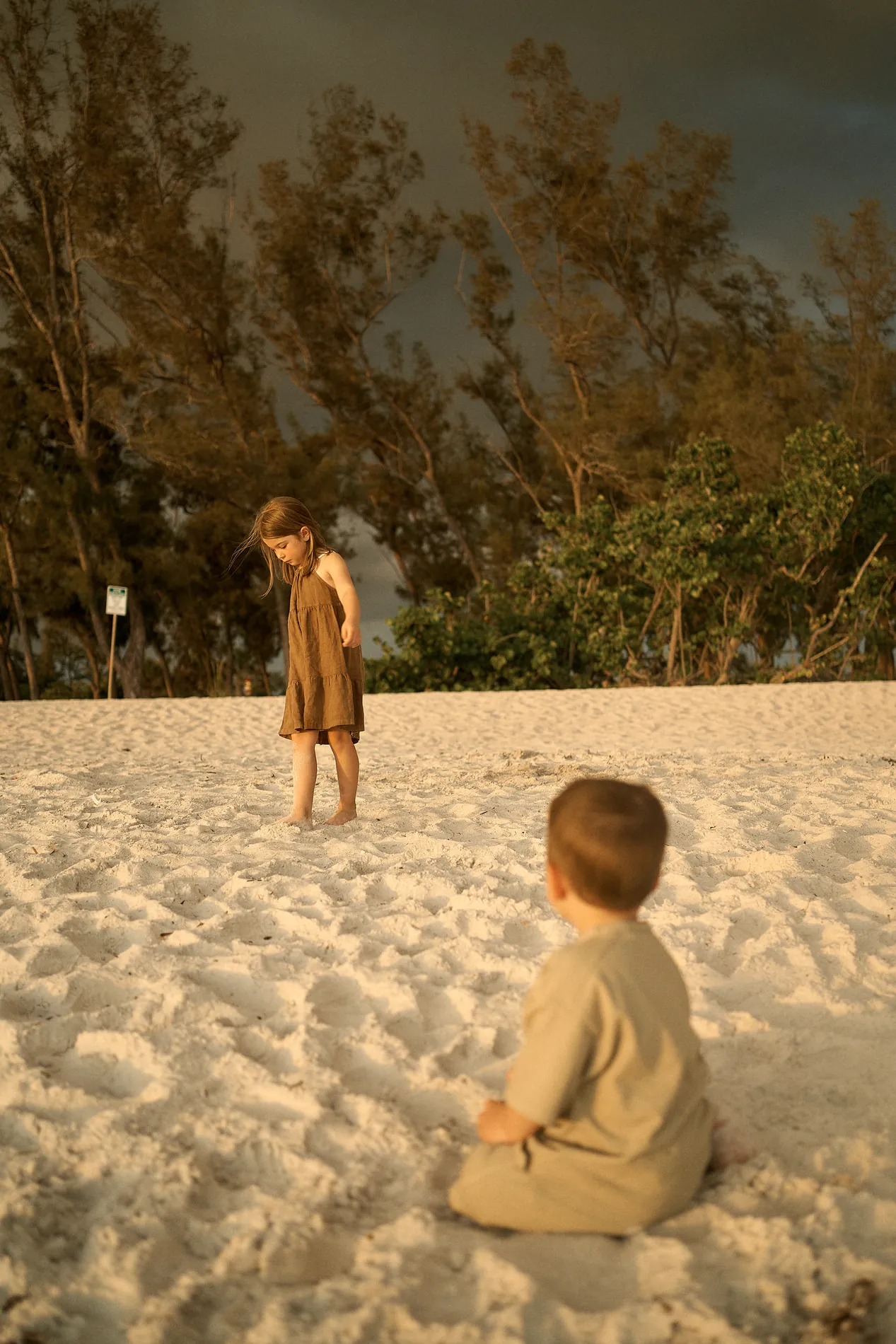
A dark sky on its own is not thunder, though. Low sun coming in under a heavy cloud, as in this photograph, is some of the most beautiful light this coast has.
Cloudy, grey or overcast: we still shoot
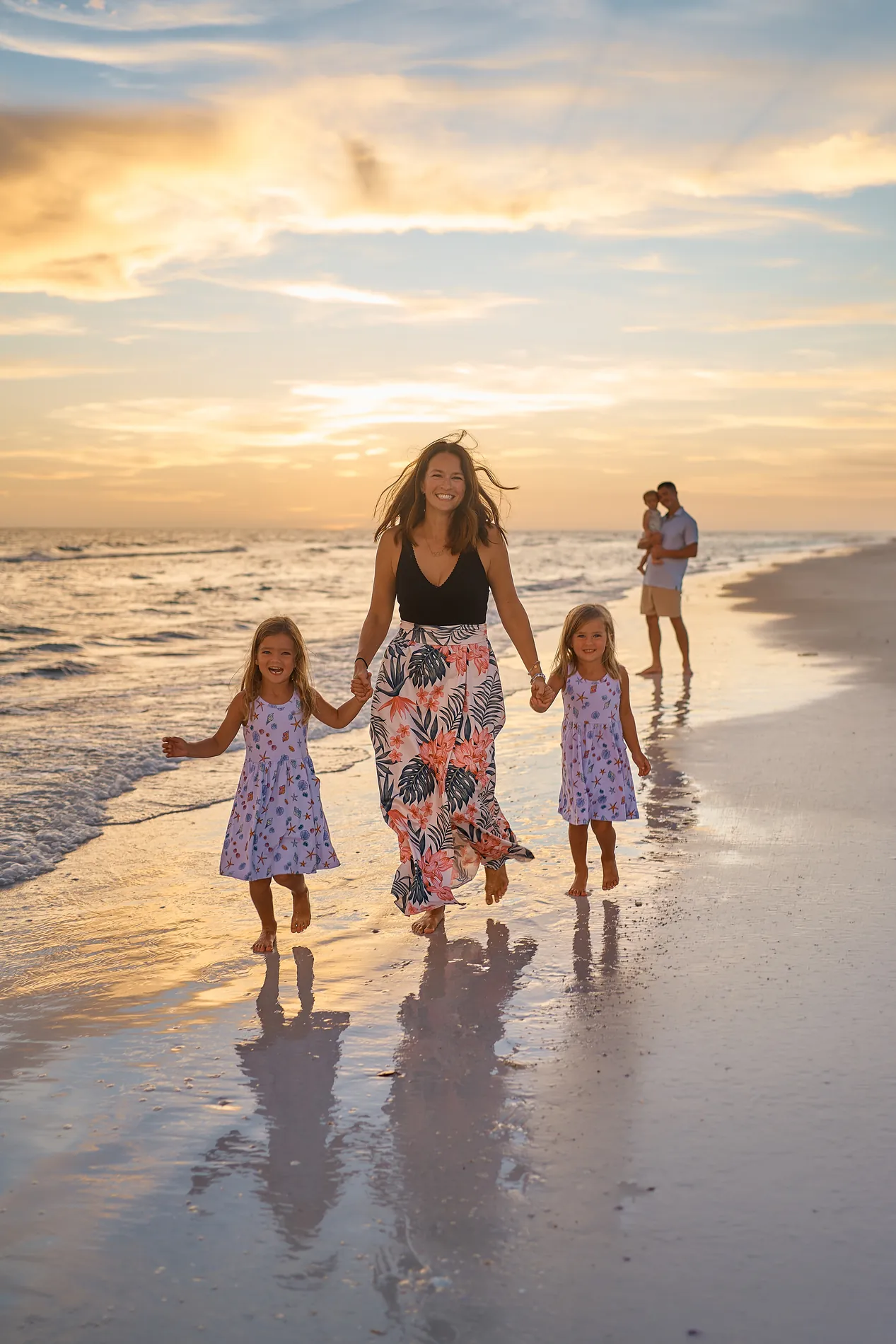
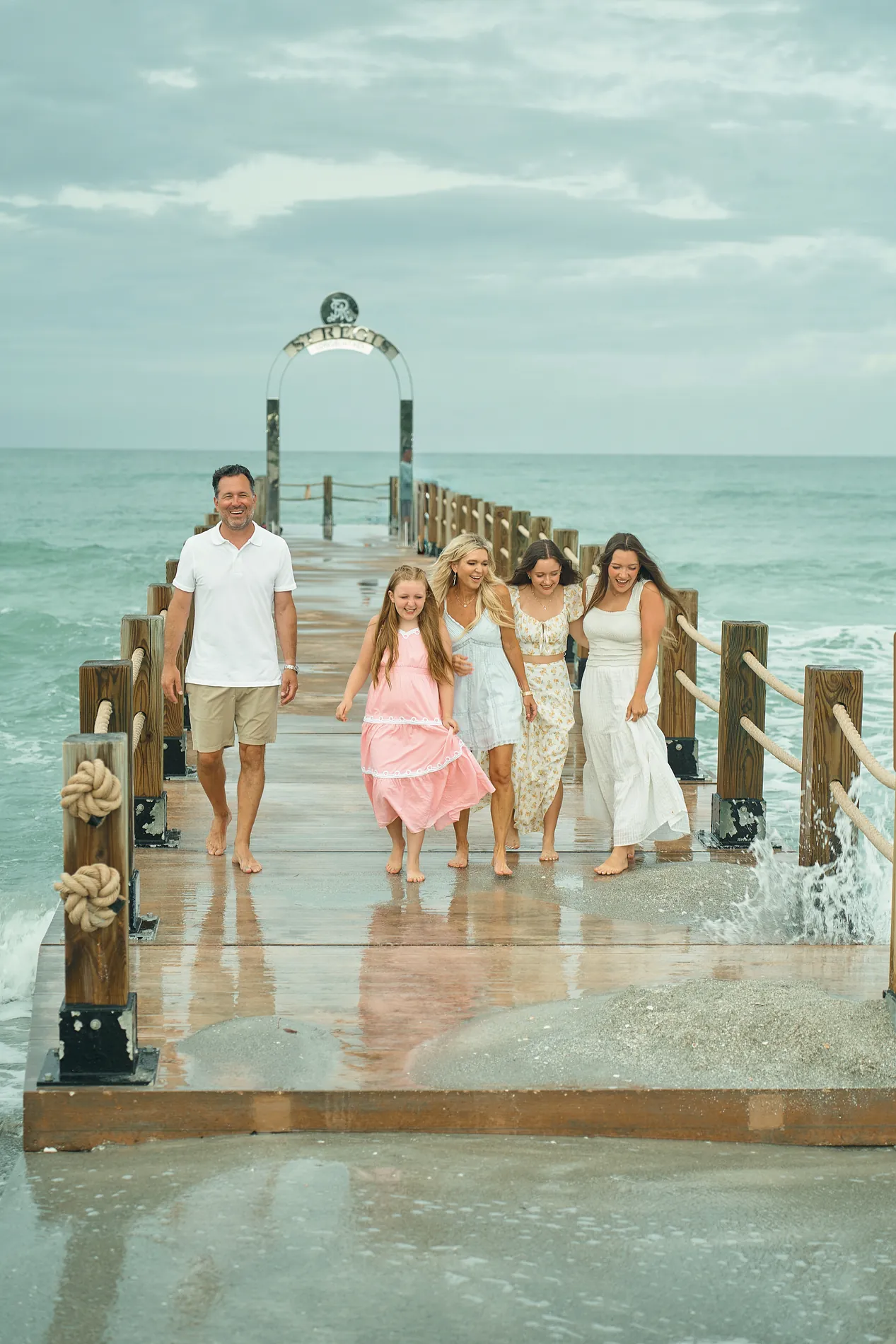
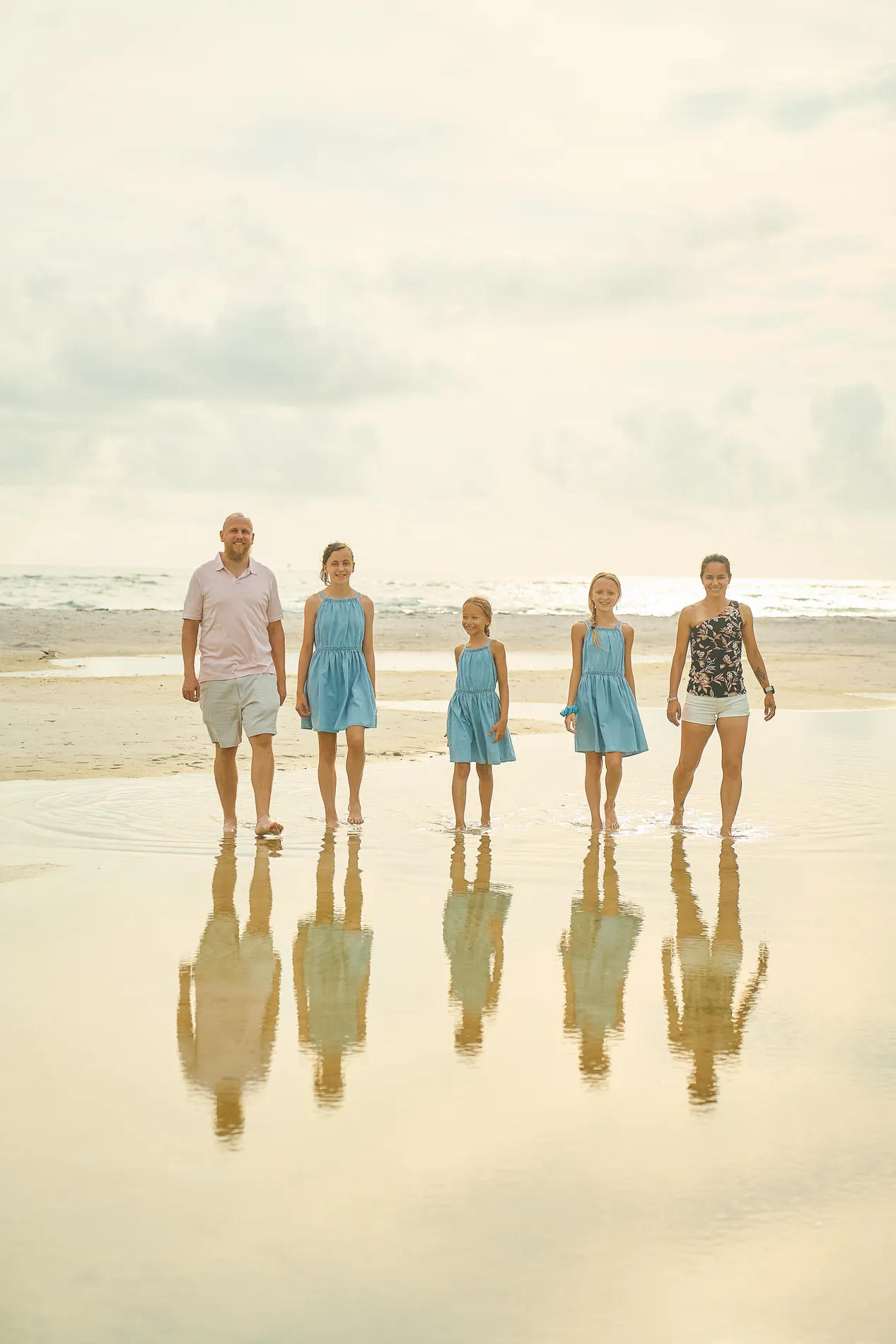
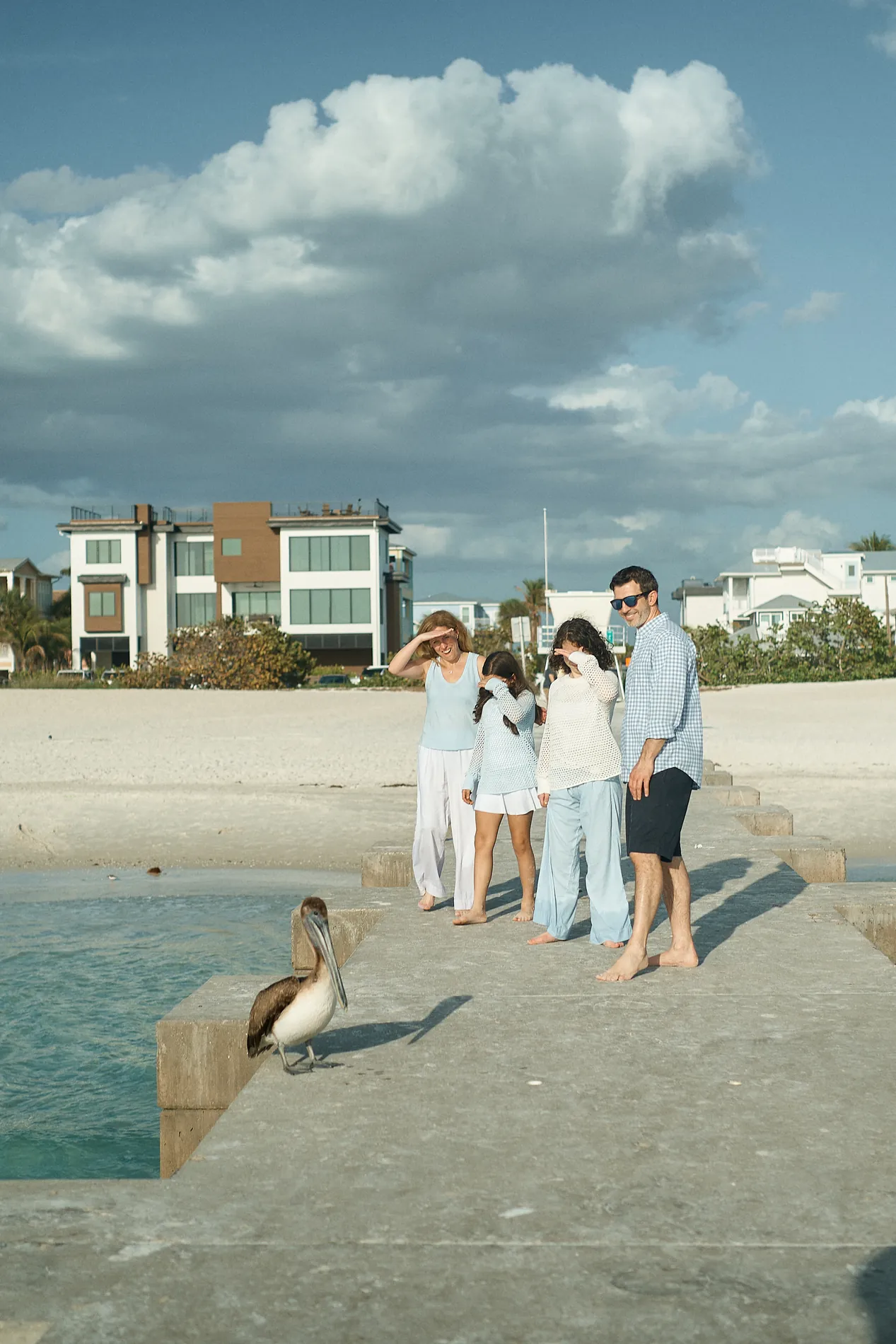
A grey evening is not a lost one. Under a thin layer of cloud the light wraps around faces, children keep their eyes open, and wet sand turns into a mirror, as under the family in blue. A sky full of big white clouds, like the one over the jetty, photographs better than a plain blue one.
The evenings I do move are the ones with rain that is not going to stop, or thunder. A grey sky is neither.
One honest note: I do not paint a sunset into a grey sky in editing, so a grey evening looks like a grey evening in your gallery, soft and calm rather than orange.
Wind: the one call I hand to you
Wind on Siesta is strongest from late September to spring, with November the windiest month, and calmest in July; the numbers are in the timing guide. Mornings are almost always calmer than evenings, in every season.
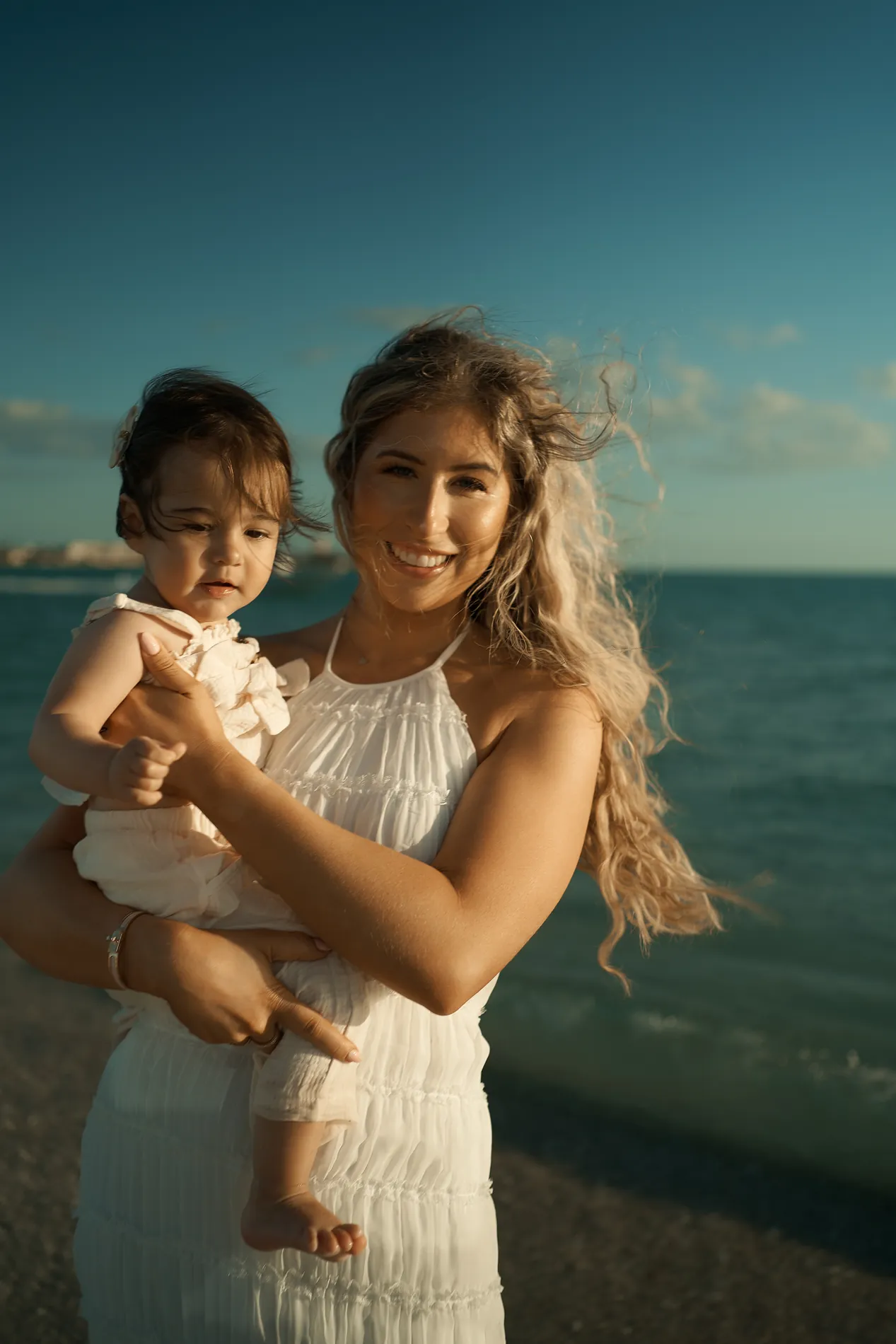
A breeze is part of a real beach photograph. On most evenings I just change where everyone stands, with their backs or shoulders to the wind, so hair blows away from faces rather than across them.
When the wind is genuinely strong, I tell you before we start what it will mean: hair across faces, dresses blowing, small children who do not love sand in the air. Editing can clean up a lot, but not every strand of hair that crosses an eye. Then you decide whether we shoot or take another window, and moving for wind costs you nothing.
Tying back long hair for some portraits and choosing a dress with a little weight helps more than anything else; the what-to-wear guide has the details.
Heat, red tide and hurricane season
Three more things visitors ask about before they book. None of them is a reason to skip a summer or fall trip.
01
Is July too hot?
Not at the right hour. In July and August the air at 7 am feels like about 81 degrees in the shade, and around 92 in the early evening, from NOAA's long-term hourly averages for Tampa, the nearest station that keeps them. Full sun adds up to 15 degrees more, according to the Weather Service.
That is why from spring to October I do not sell midday beach sessions, and why a summer morning is kinder to grandparents and toddlers. Bring water, and keep small children in the shade until we start. On the hottest days, about eight a year in each of July and August, the Sarasota heat index reaches 105 or more.
02
Red tide
Red tide is an algae bloom in the Gulf, and it does not happen every year. When it does, Florida's wildlife commission says it most often forms in late summer and early fall and can last into spring. With an onshore wind it can cause coughing, sneezing and itchy eyes on the beach, and children, older people and anyone with asthma feel it more.
The commission publishes a current status map, worth a look a day or two before your session. A bloom can sit on one stretch of coast for days, so moving the date rarely helps. If there is one near your beach, we decide together: often the air is fine and we go ahead, otherwise I take us to another beach.
03
Hurricane season
Officially the Atlantic season lasts six months, from June 1 to November 30, and the National Hurricane Center's records put the busiest stretch from mid-August to mid-October. Tropical storms usually come with days of warning, and the history of the big ones on this coast is in the timing guide.
If a storm takes your session, it is a weather move like any other, at no cost to you. If a hurricane or anything else nobody could plan for cancels your trip, I refund the session in full.
How to plan a Florida vacation photo session around the weather
01
Book early in the trip
A session on the second or third day leaves spare mornings and evenings behind it, so if the sky takes the first one, we still have room.
02
In summer, think morning
From June to September the early morning is the calmest, coolest and driest window of the day.
03
Tell me your departure day
Reply to your confirmation email with the day you fly home, so I know how much room there is to move.
04
Pack for the evening you booked
In winter a layer for small children after sunset; in summer water and something to wipe sandy feet. No umbrella: if it is raining hard, we are not on the beach.
05
Mini sessions and big groups
The same rule: a weather move to the next open slot costs nothing, for mini sessions on Siesta Key and for groups of ten to twenty alike. Holiday weeks are on the holiday photos page.
06
After weeks of rain
Late in a wet summer some of the small paths to the beach on Siesta hold water for weeks, and the mosquitoes move in. When that happens I meet you at another access instead of walking you through it in a white dress.
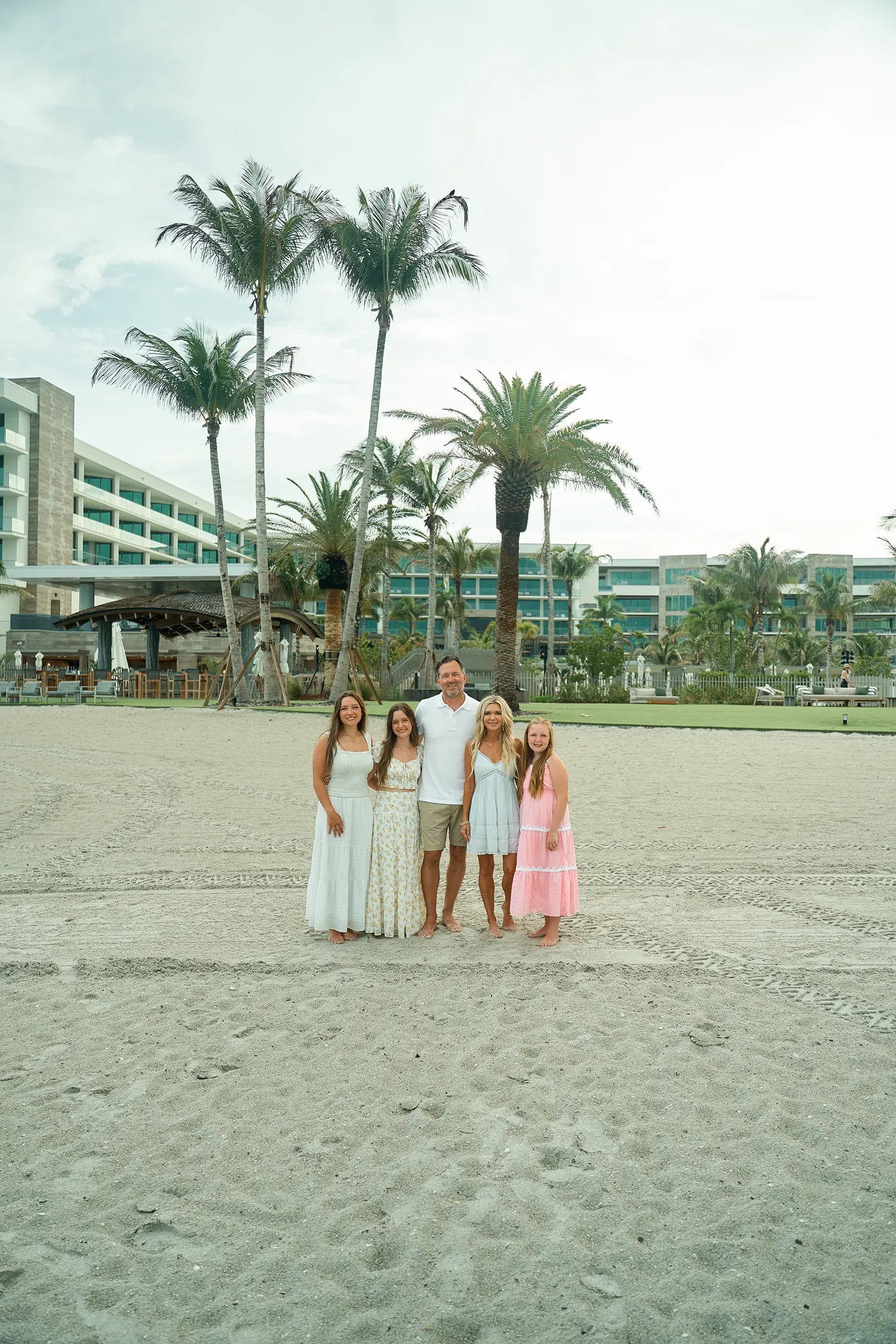
A flat white sky, like this one over a family on Longboat Key, still makes a good session.
Booking, with the weather already taken care of
- 01
Pick the session
A family hour is $350 for up to five people: mornings any day and Monday to Thursday evenings. Friday to Sunday evening is $450. Mini sessions on Siesta Key have their own page. The Sessions page always has the current prices, and its calculator shows your full price before you pay.
- 02
Pick a date and a start time
Choose a day, and the start times you see are the morning and evening windows I shoot on that date, set from its sunset. Dates open four months ahead; booking closes 12 hours before the start.
- 03
Hold it with 30 percent
You pay the 30 percent deposit online and the rest after we shoot. A weather move takes the deposit with it.
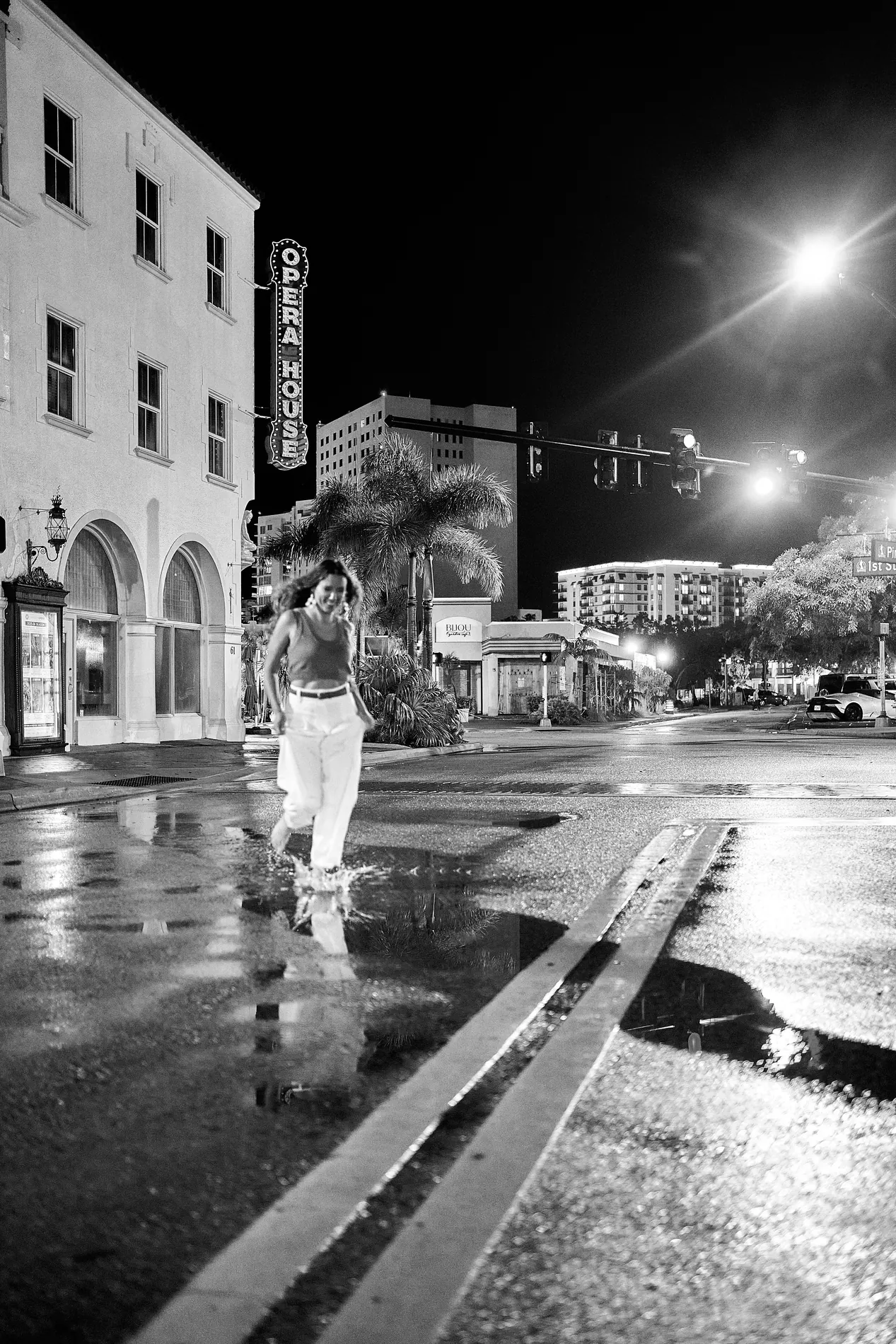
Rated 4.97 from more than 90 reviews. More about me, or text me with a question first.
We had a wonderful time working with Yuriy. He was extremely flexible with the timing of our shoot and was very friendly and personable. Our photos turned out beautifully. I highly recommend booking with him if you're looking for a quick, hassle free, family photo shoot on the beach.
Rain and family photos in Florida: FAQ
Do you cancel a session because of a rain forecast?
No. A rain percentage does not say which hour it rains, and in summer the evening often clears after an afternoon storm, so I decide from the actual sky on the day. What a 40 percent chance means.
Do we lose our deposit if it rains?
Not for a weather move. Moving costs nothing, and the deposit moves with the booking. My rain policy.
Who decides whether the session goes ahead?
I do, for rain and storms. Strong wind is your call. My rain policy in five points.
Can we reschedule ourselves in the booking system?
There is no reschedule button. Reply to your confirmation email or text me, and I move the booking for you.
When will we know if the session is moved?
About an hour before the start, never earlier: for a 7 pm session, around 6. Until then, plan as if we meet. If the evening is genuinely gone, I move it and confirm the new time with you. How I decide.
What if rain takes our last evening before we fly home?
Then I refund what you paid in full, deposit included. Better still, do not book the last evening of the trip: the weather here changes quickly, so keep at least one spare morning after the session. How to plan around the weather.
What if it starts raining in the middle of the session?
I look at how much we already have. If it is enough for a full gallery, we finish there. If not, we wait out the shower, shoot the rest on another day, or I refund part of the price; we choose together on the spot.
What happens if there is thunder or lightning?
The National Weather Service rule is to leave the beach when you hear thunder and wait 30 minutes after the last rumble. If thunder takes the evening, it is a weather move at no cost. Lightning on the beach.
When is the rainy season in Sarasota?
Roughly June to September, when about 60 percent of the year's rain falls, with storms from about mid-May to mid-October and the peak from July to early September. Rain risk by month.
Is the summer heat safe for grandparents and toddlers?
At the right hour, yes. From spring to October I do not sell midday beach sessions, and a summer morning is the kindest window: about 81 degrees feels-like at 7 am. Bring water and keep small children in the shade until we start. Heat by the hour.
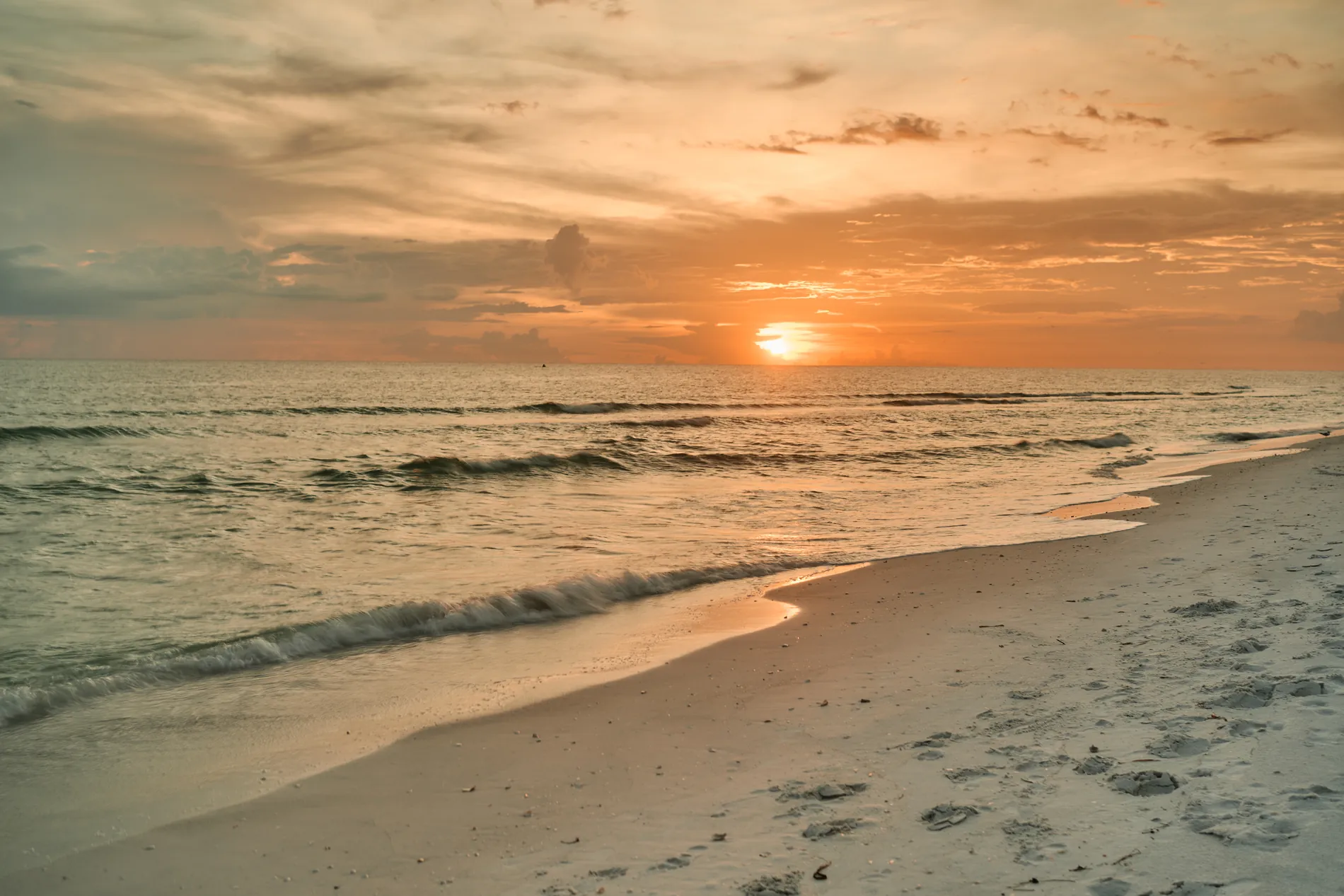
Book your session. I will watch the sky.
Pick your dates and the calendar shows the mornings and evenings that work for them. If the weather has other plans, the move is on me.
$350 an hour · $450 weekend evening. Rated 4.97 from more than 90 reviews.